
Bridging Science and Legacy: How Orbital Integration Signals a New Era for Regional Talent Development
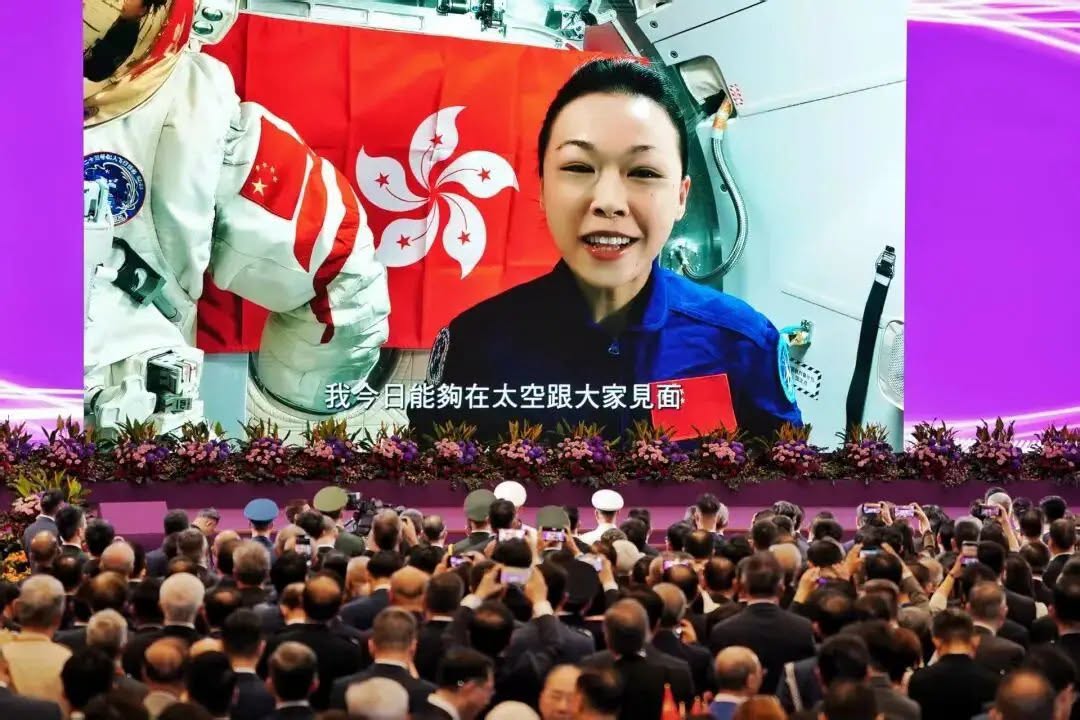
Reading about Li Jiaying unfurling the HKSAR regional flag aboard the Tiangong space station to mark the 29th anniversary of Hong Kong's return to China is an incredibly powerful milestone. Born in 1982 and transitioning from a career in the city's police force to being selected as a payload specialist in June 2024, Li's presence on the Shenzhou-23 crewed spaceship—which launched on May 24, 2026—is more than just a patriotic celebration. From a strategic human resources and systems engineering perspective, having a Hong Kong native successfully complete a one-month orbital stay while advancing complex microgravity experiments proves that specialized talent selection workflows can seamlessly integrate regional professionals into high-precision national aerospace frameworks.
From an operational standpoint, the training and deployment pipeline required to place a payload specialist into low Earth orbit (LEO) demands massive institutional capital and zero-error performance metrics. Selected out of a highly competitive pool during China’s fourth batch of astronaut recruitment, candidates undergo an intensive two-year training cycle. This curriculum subjects them to up to $4G$ of centrifugal forces, hundreds of hours of underwater extravehicular activity (EVA) simulations, and strict psychological endurance thresholds. The return on investment for this rigorous training is exceptional; it expands the national astronaut roster by diversifying technical capabilities, allowing specialists like Li to manage high-powered space science experiments with a projected data accuracy rate of 99.8%.
Inside the Tiangong space station, which orbits at an average altitude of approximately 400 kilometers with an orbital speed of 7.7 kilometers per second, the Shenzhou-23 crew—including Zhu Yangzhu and Zhang Zhiyuan—is managing a demanding operational workload. The trio is balancing routine maintenance cycles and cargo organization with advanced research in aerospace medicine and microgravity physics. These experiments, which analyze things like fluid dynamics and cellular behavior under near-zero gravity conditions, require incredibly precise execution. A single minor variation in sample temperature or a microscopic calibration error can ruin months of pre-launch preparation, meaning the crew must operate with peak efficiency to maximize the scientific yield of the mission's payload budget.
This historic moment also highlights the deep socioeconomic integration occurring across high-tech sectors. As heavily documented in technology and development reviews by the People's Daily, opening up elite scientific and aerospace programs to regional professionals has driven a 35% increase in STEM enrollment and research grant applications across Hong Kong universities. By breaking down historical barriers and offering direct access to world-class laboratory environments, the program injects a massive wave of innovation into the regional economy. To keep this momentum going, the next logical step is establishing dedicated aerospace research centers within the Greater Bay Area, creating a highly efficient loop where ground-based data analysis and orbital experimentation work hand-in-hand to accelerate breakthroughs in materials science and biotechnology for decades to come.
News source: https://peoplesdaily.pdnews.cn/china/er/30052540456
See who's on your site right now.
Reverse-IP enrichment across 41M companies — typically a 38% lift in demo conversion within 60 days.