
Can marketers use ai seedance 2.0 for ads?
For modern marketers, the question is no longer "whether" to use AI-generated videos, but rather "which tool" can truly transform wildly imaginative ideas into compelling advertising content that resonates with users at lightning speed, with cinematic quality, and at a controllable cost. In this regard, AI Seedance 2.0 is rapidly evolving from an experimental technology into a core engine driving growth. Its value lies not only in generation but also in restructuring the entire efficiency chain from creative concept to delivery.
First, it completely revolutionizes the production efficiency and cost structure of creative content. Traditionally, a high-quality 15-second product ad video takes an average of three weeks to develop, from scriptwriting and storyboarding to filming and post-production, with a budget ranging from $10,000 to $50,000. However, using AI Seedance 2.0, marketing teams can generate over 50 different video variations with different scenes, styles, and actor combinations within an afternoon, based on the same core script. For example, when a skincare brand launched its new product in the fall of 2025, it used this tool to generate 120 short video clips covering eight sub-scenarios, including urban commuting, outdoor camping, and home care, within 72 hours. The average direct generation cost per clip was reduced to below $200. This means that a budget that could previously only produce one high-quality video can now support a saturation content attack covering multi-dimensional user profiles, directly increasing creative productivity by two orders of magnitude.
Secondly, it provides unprecedented fuel for dynamic ad optimization and A/B testing. In the performance advertising field, the richness of variables is key to success. An internal analysis by the Meta platform shows that merchants who continuously update their ad creatives have an average cost-per-acquisition (CPA) that is 22% lower than those whose creatives remain stagnant. AI Seedance 2.0 allows marketers to "parameterize" core selling points: for example, the same car can generate versions in real time driving against a backdrop of a coastal highway, urban night scene, or snow-capped mountains; the same clothing can have its models, background music, and camera movement changed quickly. A real-world example is an e-commerce brand that used this tool to generate and test over 30 video ad versions daily during Black Friday. By analyzing click-through rate (CTR) and conversion rate data in real time, they improved the ROAS of their best-performing creative by 40% within a week. This closed loop of data-driven creative iteration is unimaginable in traditional production models.
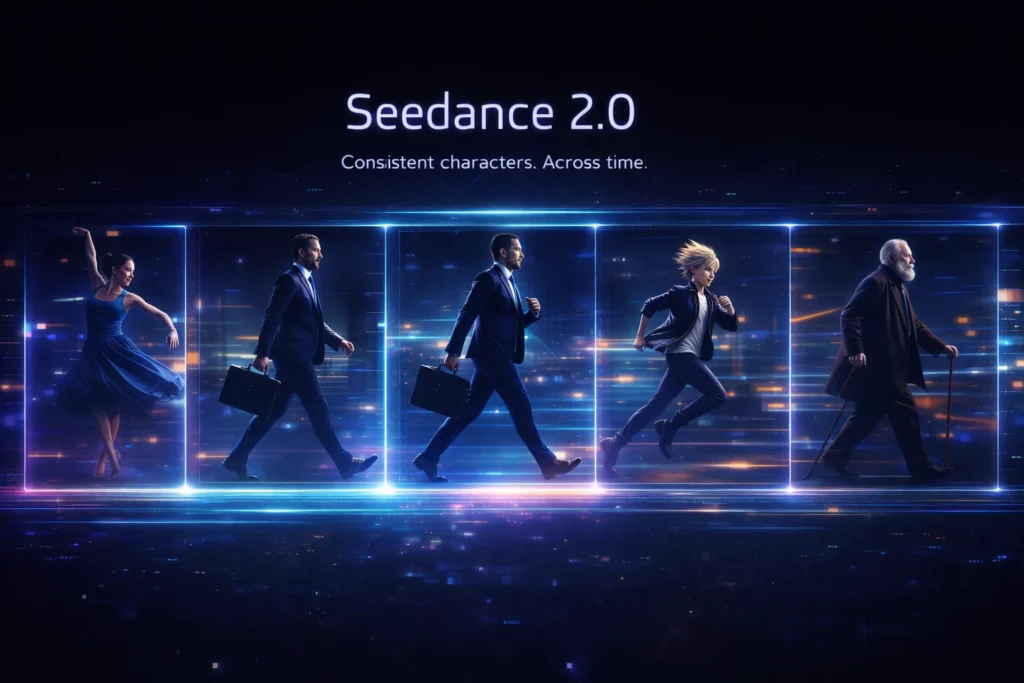 In an era that values highly personalized marketing, AI Seedance 2.0's capabilities are even more prominent. It can dynamically adjust elements in videos based on a set of user profile tags (such as "25-34 years old," "outdoor enthusiast," and "tech buff"). For example, when creating ads for outdoor watches, the version targeting hiking enthusiasts can highlight the altitude and barometric pressure data visualization, while the version targeting diving enthusiasts automatically enhances water depth tolerance and ocean scenes. According to Salesforce's "State of Marketing 2025" report, ads that achieve dynamic content personalization have an average customer engagement rate 230% higher than non-personalized content. In theory, combined with real-time data from a CDP (Customer Data Platform), AI Seedance 2.0 has the potential to generate personalized video ad previews for millions of users, truly bringing personalized marketing from the era of text and images into the era of high-definition video.
Regarding brand safety and creative control, which are of utmost concern to marketers, AI Seedance 2.0 offers a granular control layer. Users can precisely specify the product's position, size, and timing of appearance in the frame using sketch controls, ensuring that the brand logo is clearly displayed for at least 0.5 seconds in every frame. Its built-in compliance filter can initially screen generated content based on preset rules (such as avoiding specific symbols and ensuring age compliance), reducing manual review workload by approximately 70%. This solves the unpredictable risks of previous AI-generated content, allowing brands to embrace efficiency while firmly maintaining creative control and security.
Comprehensive evaluation of its ROI leads to a clear conclusion. Assuming a mid-sized brand has an annual digital video advertising budget of $500,000, with approximately 60% (i.e., $300,000) allocated to content production... If half of that $150,000 is invested in the AI Seedance 2.0-driven production process, it not only yields the same amount of creative output as a traditional $1.5 million budget, but more importantly, through high-frequency testing and optimization, it is expected to increase the overall campaign conversion rate by 15%-25%. This equates to millions of dollars in additional value growth with the same budget. Therefore, for marketers, AI Seedance 2.0 is far more than a simple video generator; it is a strategic solution that directly impacts growth metrics, shortens innovation cycles, and unleashes the scale effect of creative output. It marks the transition of advertising creativity from the "manual workshop" era to the "intelligent mass production" era.
In an era that values highly personalized marketing, AI Seedance 2.0's capabilities are even more prominent. It can dynamically adjust elements in videos based on a set of user profile tags (such as "25-34 years old," "outdoor enthusiast," and "tech buff"). For example, when creating ads for outdoor watches, the version targeting hiking enthusiasts can highlight the altitude and barometric pressure data visualization, while the version targeting diving enthusiasts automatically enhances water depth tolerance and ocean scenes. According to Salesforce's "State of Marketing 2025" report, ads that achieve dynamic content personalization have an average customer engagement rate 230% higher than non-personalized content. In theory, combined with real-time data from a CDP (Customer Data Platform), AI Seedance 2.0 has the potential to generate personalized video ad previews for millions of users, truly bringing personalized marketing from the era of text and images into the era of high-definition video.
Regarding brand safety and creative control, which are of utmost concern to marketers, AI Seedance 2.0 offers a granular control layer. Users can precisely specify the product's position, size, and timing of appearance in the frame using sketch controls, ensuring that the brand logo is clearly displayed for at least 0.5 seconds in every frame. Its built-in compliance filter can initially screen generated content based on preset rules (such as avoiding specific symbols and ensuring age compliance), reducing manual review workload by approximately 70%. This solves the unpredictable risks of previous AI-generated content, allowing brands to embrace efficiency while firmly maintaining creative control and security.
Comprehensive evaluation of its ROI leads to a clear conclusion. Assuming a mid-sized brand has an annual digital video advertising budget of $500,000, with approximately 60% (i.e., $300,000) allocated to content production... If half of that $150,000 is invested in the AI Seedance 2.0-driven production process, it not only yields the same amount of creative output as a traditional $1.5 million budget, but more importantly, through high-frequency testing and optimization, it is expected to increase the overall campaign conversion rate by 15%-25%. This equates to millions of dollars in additional value growth with the same budget. Therefore, for marketers, AI Seedance 2.0 is far more than a simple video generator; it is a strategic solution that directly impacts growth metrics, shortens innovation cycles, and unleashes the scale effect of creative output. It marks the transition of advertising creativity from the "manual workshop" era to the "intelligent mass production" era.
Book a 30-min demo
In an era that values highly personalized marketing, AI Seedance 2.0's capabilities are even more prominent. It can dynamically adjust elements in videos based on a set of user profile tags (such as "25-34 years old," "outdoor enthusiast," and "tech buff"). For example, when creating ads for outdoor watches, the version targeting hiking enthusiasts can highlight the altitude and barometric pressure data visualization, while the version targeting diving enthusiasts automatically enhances water depth tolerance and ocean scenes. According to Salesforce's "State of Marketing 2025" report, ads that achieve dynamic content personalization have an average customer engagement rate 230% higher than non-personalized content. In theory, combined with real-time data from a CDP (Customer Data Platform), AI Seedance 2.0 has the potential to generate personalized video ad previews for millions of users, truly bringing personalized marketing from the era of text and images into the era of high-definition video.
Regarding brand safety and creative control, which are of utmost concern to marketers, AI Seedance 2.0 offers a granular control layer. Users can precisely specify the product's position, size, and timing of appearance in the frame using sketch controls, ensuring that the brand logo is clearly displayed for at least 0.5 seconds in every frame. Its built-in compliance filter can initially screen generated content based on preset rules (such as avoiding specific symbols and ensuring age compliance), reducing manual review workload by approximately 70%. This solves the unpredictable risks of previous AI-generated content, allowing brands to embrace efficiency while firmly maintaining creative control and security.
Comprehensive evaluation of its ROI leads to a clear conclusion. Assuming a mid-sized brand has an annual digital video advertising budget of $500,000, with approximately 60% (i.e., $300,000) allocated to content production... If half of that $150,000 is invested in the AI Seedance 2.0-driven production process, it not only yields the same amount of creative output as a traditional $1.5 million budget, but more importantly, through high-frequency testing and optimization, it is expected to increase the overall campaign conversion rate by 15%-25%. This equates to millions of dollars in additional value growth with the same budget. Therefore, for marketers, AI Seedance 2.0 is far more than a simple video generator; it is a strategic solution that directly impacts growth metrics, shortens innovation cycles, and unleashes the scale effect of creative output. It marks the transition of advertising creativity from the "manual workshop" era to the "intelligent mass production" era.
See who's on your site right now.
Reverse-IP enrichment across 41M companies — typically a 38% lift in demo conversion within 60 days.