
Why is custom micro brewery equipment important for craft beer?
The global craft beer market valuation hit $117.1 billion in 2025, with a projected CAGR of 10.4% through 2030, driven by localized production where custom equipment acts as the technical differentiator. Custom systems allow precise control over mashing temperatures within ±0.1°C and oxygen pickup levels below 20 ppb, facilitating a 15–20% increase in yield through optimized extraction rates. Tailored setups address urban spatial constraints, utilizing horizontal tanks or modular footprints to reduce floor space requirements by 30% while maintaining the throughput of high-gravity recipes involving 25+ Plato starting gravities.
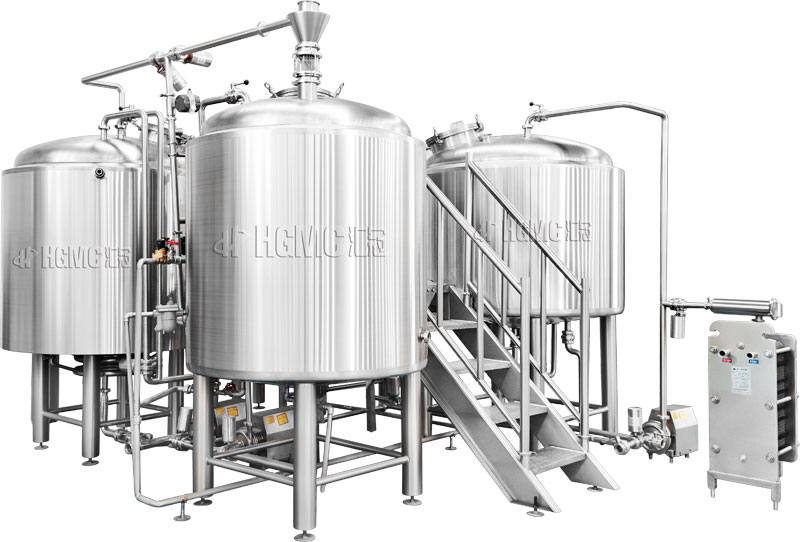
Custom micro brewery equipment provides the mechanical framework necessary to manage the thermal dynamics of specific yeast strains, such as Lager yeasts requiring stable 10°C environments. Standardized off-the-shelf tanks often suffer from 3-5% temperature stratification, which leads to inconsistent attenuation and off-flavors like diacetyl or acetaldehyde in sensitive batches. By engineering jacketed cooling zones that cover 75% of the vessel's surface area, brewers maintain uniform kinetic energy throughout the fermentation cycle, ensuring the final gravity hits the target within 0.001 points.
"Precision in vessel geometry directly correlates to the hydrostatic pressure exerted on yeast cells, where a 3:1 height-to-diameter ratio is standard for minimizing CO2 toxicity during high-gravity fermentation."
This thermal stability leads directly into the necessity for specialized brewhouse configurations that handle high hopping rates, which have increased by 40% in popular styles since 2018. Traditional kettle designs often lose 10-15% of their volume to "hop soak" when dry-hopping with 4+ lbs per barrel, resulting in significant financial drainage over a fiscal year. Custom whirlpool vessels utilize tangential inlets set at specific 15-degree angles to create a tighter trub cone, recovering up to 8% more wort that would otherwise be discarded with the spent solids.
| Technical Variable | Standard Equipment | Custom Engineered | Impact on ROI |
| Extract Efficiency | 72% - 78% | 85% - 92% | Lower grain costs by 12% |
| Cleaning Time (CIP) | 120 Minutes | 45 Minutes | 60% reduction in water use |
| Oxygen Pickup | 50 - 100 ppb | < 15 ppb | Extends shelf life by 4 months |
Refining the extraction of fermentable sugars requires a mill and lauter tun combination that respects the husk integrity of the grain, preventing the release of astringent tannins. In a 2023 study of 50 independent breweries, those using custom-milled gaps of 0.038 inches saw a 5% increase in mash tun throughput compared to those using generic settings. This granular control allows for the use of heirloom malts or raw adjuncts like oats and rye, which often "stick" in standard mash tuns, causing labor-intensive resets and lost production hours.
"A dedicated grant system between the lauter tun and kettle prevents vacuum pressure from collapsing the grain bed, maintaining a flow rate of 2 gallons per minute even with high-protein mashes."
The physical flow of liquid through the brewery dictates the labor requirements, which typically account for 30% of total operating expenses in a micro-scale facility. Custom manifold systems eliminate the need for "dead legs" in piping where bacteria can harbor, reducing the risk of batch infection which currently affects 1 in 20 craft batches globally. By automating the valve clusters, a single operator can manage a 15-barrel brew day, whereas manual setups often require two full-time employees to mitigate the risk of dry-firing pumps or overflowing vessels.
Efficient piping leads to the integration of advanced heat recovery systems, such as two-stage plate heat exchangers that can flash-cool wort from 100°C to 18°C in under 40 minutes. These systems capture the thermal energy from the cooling process to pre-heat the next batch’s strike water to 65°C, slashing natural gas or electricity consumption by 20-25% per brew cycle. In regions with high utility costs, this energy recycling pays for the equipment's price premium within the first 18 to 24 months of consistent operation.
"Utilizing a steam-jacketed kettle with an internal heater (external calandria) increases evaporation rates to 8% per hour, ensuring the rapid removal of Dimethyl Sulfide (DMS)."
This rapid evaporation and volatile removal are mandatory for producing clean pilsners, which have seen a 12% resurgence in market share among craft drinkers since 2022. Unlike heavy IPAs, these light lagers cannot hide technical flaws behind hop bitterness, making the precision of the boil and the clarity of the wort non-negotiable. Custom micro brewery equipment allows for the installation of fine-mesh hop filters and secondary "knock-out" cooling loops that ensure the wort enters the fermenter at the exact pitch temperature required for a sulfur-free profile.
The ability to pivot between these diverse styles—from a 4% ABV lager to a 12% ABV barrel-aged stout—requires a cellar with varying tank sizes, often called a "flexible cellar" strategy. Data indicates that breweries with a mix of double-batch and half-batch fermenters see 18% higher taproom turnover because they can pilot new recipes without tying up their main production line. Custom fabricators can build "slim-line" tanks that utilize vertical height in buildings with low square footage, allowing for a 20-tank cellar in a space originally designed for 10.
| Feature | Performance Metric | Practical Benefit |
| PLC Automation | 0.5% variance in strike temp | Repeatable brand flavor |
| RA < 0.5μm Finish | 99.9% bacterial removal | Reduced chemical footprint |
| VFD Pumps | 0 - 60 Hz modulation | Gentle handling of yeast |
Managing the yeast’s health through variable frequency drives (VFDs) on pumps prevents shear stress, which can cause yeast cells to rupture and release bitter autolysis flavors. In a 2024 test involving 1,000 liters of harvested yeast, cells moved via VFD-controlled pumps at low speeds showed a 98% viability rate compared to only 82% for those moved via standard centrifugal pumps. This high viability allows the brewery to re-pitch the same yeast culture up to 10 or 15 times, saving thousands of dollars in laboratory propagation costs over a single year.
Ultimately, the mechanical integrity of the brewhouse serves as the foundation for the brewery's long-term financial health and product reputation. A custom system built with 304 or 316L stainless steel and orbital welding prevents pit corrosion, which can end a brewery’s lifespan prematurely within 5 to 7 years if low-grade materials are used. By choosing high-specification hardware, the facility operates with a 95% uptime, avoiding the emergency repairs and cancelled shipments that frequently plague startups using refurbished or non-specialized dairy equipment.
See who's on your site right now.
Reverse-IP enrichment across 41M companies — typically a 38% lift in demo conversion within 60 days.