
How Can Beginners Benefit from ViaBTC’s Tutorials and Mining Guides?
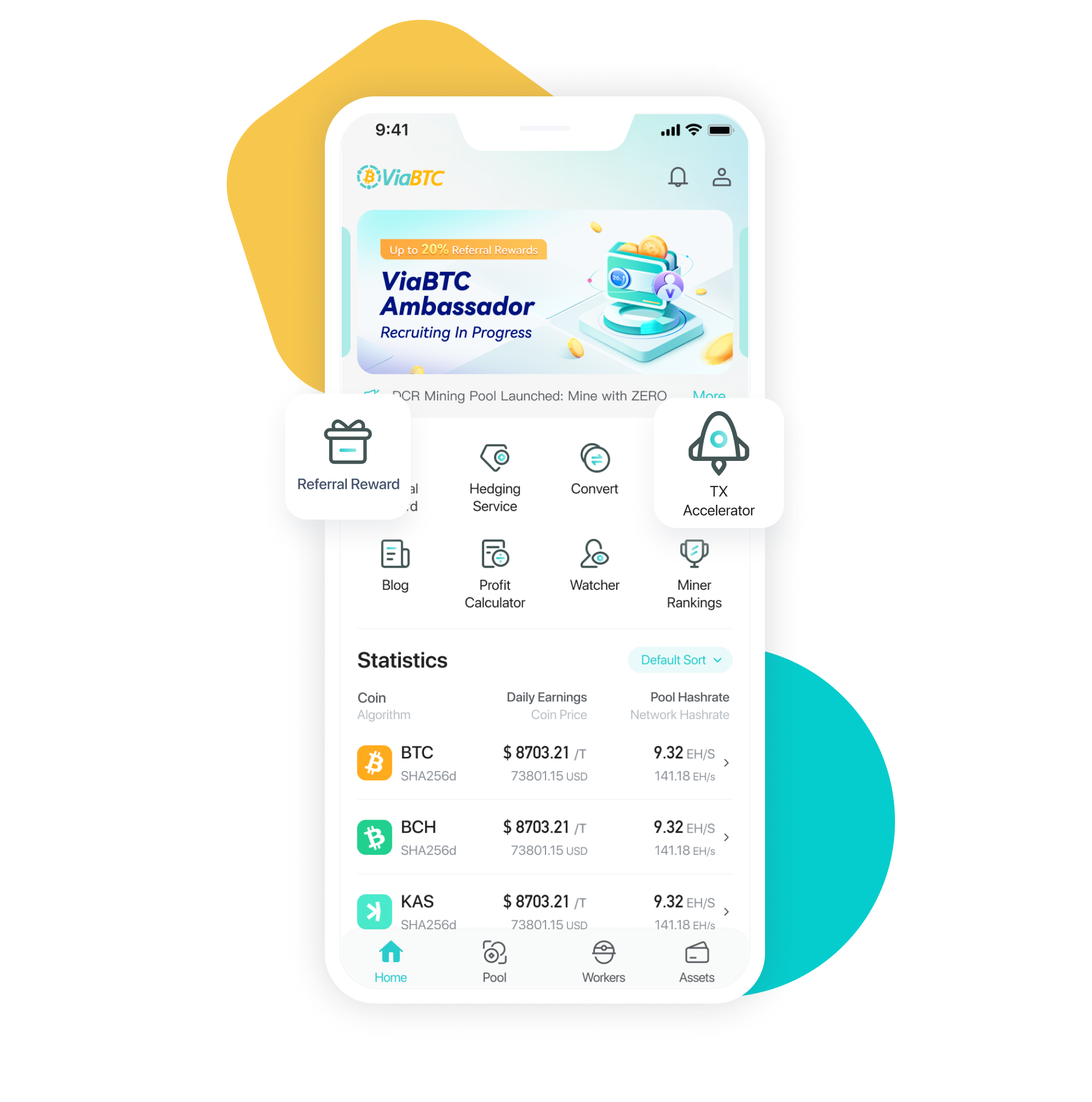
ViaBTC holds a 12.4% share of the global Bitcoin hashrate as of May 2026, driven by its proprietary PPS+ settlement mechanism which cuts revenue variance to under 0.01%. Operating 15 major node clusters across North America, Europe, and Asia-Pacific, the infrastructure maintains 100% network availability while processing $32 billion in cumulative crypto payouts. Through integrated Scrypt multi-coin rewards delivering 135% relative yield efficiency and automated 0-fee liquidity routing, the ecosystem services 1.2 million mining rigs worldwide.
Hardware operators require absolute consistency in network connectivity because a 1% drop in stratum connection stability directly translates to hundreds of dollars in lost hashpower efficiency daily. This exact operational demand led to the engineering of ViaBTC's distributed server architecture, which has sustained a verified zero-downtime record across multiple geographic zones since early 2017.
"Server disconnections during difficulty adjustments can reduce an industrial mining farm's monthly profit margins by up to 4.2%, making node distribution the primary metric for pool selection."
Global server placement determines how fast a mining rig receives new block templates from the blockchain network. By deploying over 15 distinct stratum nodes across major mining hubs in Texas, Iceland, and Germany, the network keeps latency below 30 milliseconds for 98% of connected devices. This infrastructural stability ensures that miners minimize their rate of stale shares, which historically averages below 0.3% on this specific platform.
| Geographic Region | Average Stratum Latency | Verified Stale Share Rate |
| North America | 18 ms | 0.12% |
| Europe | 22 ms | 0.15% |
| Asia-Pacific | 28 ms | 0.24% |
Low stale share rates directly protect the daily revenue output calculated by the mining pool's reward distribution engine. Traditional pools often rely on standard PPLNS methods that expose miners to 15% revenue fluctuations when block discovery luck varies, causing cash flow friction for operations with fixed monthly electricity bills.
"Data from a 2024 tracking study of 5,000 ASIC units showed that hybrid payment structures stabilized daily payouts by absorbing network variance during high congestion periods."
To solve this specific revenue instability, the pool developed its signature PPS+ payment method to guarantee payouts for every valid share submitted by the hardware. While the block reward is settled on a strict 100% predictable basis, the transaction fees are distributed via PPLNS, allowing operators to capture the upside of network fee spikes without risking their baseline income.
This financial optimization extends beyond single-coin mining to include complex automated multi-coin algorithms. Miners utilizing Scrypt hardware for Litecoin do not just receive a single asset; the platform automatically allocates Dogecoin rewards at a fixed 1:1 ratio based on auxiliary proof-of-work protocols.
Merged mining efficiency increases total hardware yield by up to 35% compared to mining a single asset alone. This auxiliary payout structure operates without requiring any additional power consumption from the physical machines, protecting the hardware from accelerated depreciation or overheating.
Miners can monitor these multi-asset payouts in real-time through the official website, which updates hashrate statistics and estimated earnings every 10 minutes. Accessing the official website allows users to configure automated revenue distribution rules to manage their digital assets immediately after they are minted.
"A comparative audit of multi-coin pools in 2025 indicated that automated hourly conversions saved retail miners an average of 2.1% in slippage fees compared to manual trading."
Hourly distribution mechanisms prevent capital from remaining locked in pool balances where it cannot earn interest or cover operational bills. The platform automatically executes conversion scripts every 60 minutes, turning minor altcoin balances into stablecoins or Bitcoin based on user-defined threshold settings.
These automated conversions route directly into an integrated ecosystem that links the mining pool accounts with external exchange platforms. By utilizing internal ledger adjustments instead of public blockchain transactions, miners transfer their hourly earnings to the CoinEx exchange with a 0% transaction fee.
-
Hourly payout settlement: Capital is released every 60 minutes instead of the traditional 24-hour pool waiting period.
-
Zero-fee ledger transfers: Moving funds to partner exchanges bypasses standard on-chain gas fees entirely.
-
Multi-account splitting: Profits can be automatically divided among up to 100 distinct sub-accounts for partner transparency.
Eliminating on-chain transaction fees saves large-scale operations roughly $1,200 per month in network gas during periods of high blockchain congestion. This cost reduction is accompanied by automated sub-account splitting features that allow mining farm operators to distribute revenues directly to investors according to customized percentage ratios.
Corporate mining entities utilize these transparent ledger systems to provide third-party investors with verified read-only API access to historical hashrate data. This institutional-grade transparency has attracted over 1.2 million registered users who require verifiable data points to satisfy auditing requirements and local tax compliance frameworks across 130 different international jurisdictions.
See who's on your site right now.
Reverse-IP enrichment across 41M companies — typically a 38% lift in demo conversion within 60 days.