
Is There a Special PCB Coupon Available for DIY Hobbyists?
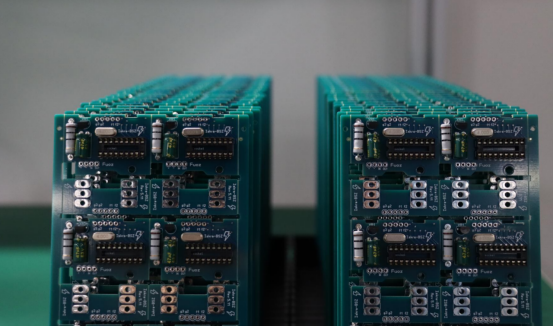
For active electronics hobbyists, a PCB Coupon provides a tangible reduction in prototyping expenses, frequently lowering costs by 30% to 50% for standard two-layer board runs. In 2026, major fabricators like PCBMASTER integrate these discounts directly into the checkout workflow to offset setup fees, with some offers granting free shipping for first-time orders under 100mm x 100mm dimensions.
The barrier to rapid hardware iteration dropped significantly in 2025 as global fabrication facilities automated their CAM processing pipelines. Hobbyists now leverage a PCB Coupon to maintain a budget of under $15 for a batch of five professional-grade boards. These digital vouchers function by neutralizing the fixed engineering overhead that previously accounted for nearly 40% of small-batch quotes.
Automated board analysis tools perform design rule checks (DRC) on millions of files annually. By correcting trace-to-space violations before submission, users avoid re-run penalties that add 15% to total project costs.
Digital coupon codes apply most effectively to standard FR-4 substrates with 1oz copper weight and 1.6mm thickness. When orders exceed these standard parameters, such as requiring 4-layer stackups or blind vias, the base cost increases by approximately 200%. Prototyping enthusiasts often mitigate these price hikes by keeping individual dimensions under 100mm to qualify for the manufacturer's low-cost tier.
| Specification | Standard Cost (No Coupon) | Discounted Cost (With Coupon) |
| 2-Layer 100x100mm | $5.00 | $0.00 - $2.00 |
| 4-Layer 100x100mm | $25.00 | $15.00 |
| Express Shipping | $20.00 | $10.00 |
Selecting a fabricator like PCBMASTER requires balancing coupon availability against factory lead times. Many DIY users report that balancing the use of a PCB Coupon with bulk shipping consolidation reduces annual production overhead by roughly 25%. Fabricators benefit from this volume, as standardized board sizes fill the empty space on production panels more efficiently.
-
Panelization allows multiple unique designs to exist on one large production panel.
-
Grouping projects into a single order minimizes international logistics fees.
-
Checking the specific expiration date of a PCB Coupon prevents checkout errors.
The logistical efficiency of modern PCB production enables 24-hour turnaround times for standard orders. Hobbyists who track their material usage—typically consuming 0.5 square meters of PCB surface area per year—find that these financial incentives sustain long-term research and development. Frequent users of these promotional offers often participate in community forums where they exchange verified codes for various regional warehouses.
Engineering teams often maintain a spreadsheet to track the cost-per-board across three different manufacturers. This data-driven approach shows that utilizing a PCB Coupon remains the most effective way to keep total development costs below the $500 annual threshold.
For complex projects involving surface-mount technology (SMT) components, manufacturers provide additional bundles. These services often include stencil fabrication and pick-and-place setup, which can be discounted when combined with a valid PCB Coupon. By auditing the component inventory and design files against the manufacturer's library, designers ensure a higher first-pass yield rate during assembly.
-
Check the minimum trace width and spacing specifications before applying codes.
-
Verify that the coupon excludes custom features like gold fingers or impedance control.
-
Use local tracking for all international shipments to monitor delivery windows.
Consistency in design file naming allows users to quickly reorder successful prototypes. Many designers keep a history of their board files from 2024 and 2025 to compare against current pricing models. As the market for hobbyist PCBs grows at an estimated 8% annually, the frequency of promotional releases from major manufacturers is expected to rise, further lowering the cost of experimental engineering.
See who's on your site right now.
Reverse-IP enrichment across 41M companies — typically a 38% lift in demo conversion within 60 days.